The automotive repair industry is in the middle of a massive shift, and shops that fail to adapt risk being left behind. Advanced Driver Assistance Systems — ADAS — are no longer luxury features reserved for high-end vehicles. They are standard equipment on the majority of cars rolling into your bays today. And every one of those systems depends on sensors that must be precisely calibrated after a growing list of common repairs.
The numbers paint a clear picture. In Q3 2025, 35.6% of all direct repair program (DRP) estimates included calibration, a staggering 9-point jump from 26.9% just twelve months earlier. That is not a gradual trend. That is an industry turning a corner at speed. Shops that can perform ADAS calibrations in-house are capturing hundreds of dollars in additional revenue per vehicle. Shops that cannot are watching that revenue — and their customers — walk out the door.
This guide covers everything you need to know: what ADAS calibration is, when it is required, how profitable it can be, and what equipment you need to get started. If you have been on the fence about adding ADAS capability, the data in this article should settle the question.
What Is ADAS and Why Does It Need Calibration?
ADAS refers to a suite of electronic safety systems designed to assist drivers, reduce human error, and prevent collisions. These systems have expanded rapidly over the past decade, and the vehicles in your shop today likely include several of the following:
- Forward collision warning — Detects an imminent collision with the vehicle ahead and alerts the driver.
- Automatic emergency braking (AEB) — Applies the brakes automatically if the driver does not respond to a collision warning.
- Lane departure warning and lane keeping assist — Monitors lane markings and either warns the driver or actively steers the vehicle back into the lane.
- Blind spot monitoring — Uses radar sensors to detect vehicles in the driver's blind spots and provides visual or audible alerts.
- Adaptive cruise control — Automatically adjusts vehicle speed to maintain a safe following distance from the car ahead.
- Parking assist and surround-view cameras — Guides the driver during parking maneuvers using ultrasonic sensors and multiple camera feeds.
- Traffic sign recognition — Reads speed limit and other road signs using a forward-facing camera and displays them on the dash.
Every one of these systems relies on a combination of cameras, radar sensors, and in some cases lidar sensors. These components are mounted at precise locations on the vehicle — behind the windshield, inside the front bumper, in the side mirrors, at the rear bumper — and they must be aimed with extreme accuracy. A forward-facing camera that is off by even a fraction of a degree can misread lane markings, misjudge distances, or fail to detect an obstacle entirely.
Calibration is the process of realigning these sensors to the manufacturer's exact specifications. It requires specialized equipment, specific target patterns, and a controlled environment. It is not optional. When a sensor is out of alignment, the ADAS system it feeds is compromised — and the driver's safety along with it.
When Is Calibration Required?
One of the most common misconceptions about ADAS calibration is that it is only needed after major collision work. In reality, a wide range of routine repairs can knock sensors out of alignment. Here are the primary trigger events:
Windshield replacement. The forward-facing camera used by lane departure warning, forward collision warning, AEB, and traffic sign recognition is mounted directly to the windshield. Removing and reinstalling the windshield — even with perfect technique — changes the camera's position. Calibration is required every time.
Front-end collision repair. Even minor front-end impacts can shift the brackets that hold radar modules and cameras. If the bumper beam, radiator support, or headlamp assemblies are disturbed, the sensors they house must be recalibrated.
Wheel alignment. This surprises many shop owners. Adjusting the vehicle's thrust angle changes the relationship between the vehicle's direction of travel and the direction its cameras and sensors are pointed. A wheel alignment without a subsequent ADAS calibration can leave the driver with a system that "sees" the road at an angle.
Suspension work. Replacing struts, springs, or other suspension components changes the vehicle's ride height. That height change alters the vertical aim of every sensor on the vehicle. Calibration must follow any suspension repair that affects ride height.
Bumper replacement or removal. Radar modules for blind spot monitoring, adaptive cruise control, and parking assist are commonly housed behind the front and rear bumper covers. Removing a bumper for any reason — even for unrelated work behind it — triggers a calibration requirement.
Dashboard or rearview mirror removal. The forward camera is often integrated into a housing attached to the rearview mirror or the headliner near the top of the windshield. Removing the mirror or the surrounding trim to access wiring or other components can disturb the camera mount.
The critical takeaway here is that ADAS calibration touches nearly every department in a modern shop. Collision, mechanical, glass, alignment — they all generate calibration work. And that frequency is only increasing. By model year 2027, proposed federal regulations may require even more calibrations per repair event.
The Numbers: Why ADAS Calibration Is a Business Necessity
If you respond to data, the ADAS calibration trend is impossible to ignore. Here is where the market stands right now and where it is heading:
- 65% of all repairs now require calibration. That is not a projection. That is the current state of the vehicles already in your shop.
- 61% of collision repair vehicles require ADAS calibration. More than half of your collision work needs this service.
- 86% of DRP repairs include a scan, and 33% include calibration. The gap between scanning and calibration is closing fast.
- Survey data projects 30% growth in ADAS calibration volume over the next two years. The work is not leveling off; it is accelerating.
- By 2029, over 50% of all registered vehicles will have 8 or more ADAS systems. The density of systems per vehicle is climbing, which means more calibrations per repair.
- The ADAS calibration equipment market is projected to reach $911.2 million by 2033, growing at a 12.6% compound annual growth rate.
- Industry-wide ADAS calibration revenue is projected to hit $4 billion by 2030. That is $4 billion in revenue that will flow to the shops equipped to capture it.
These are not aspirational figures. They reflect a structural change in the vehicles being manufactured and the repairs they require. Shops that invest in ADAS calibration capability are positioning themselves on the right side of an irreversible trend.
Have questions about what ADAS calibration could mean for your specific shop? Call our team at 866-217-0063 for a no-pressure conversation about the opportunity.
The Cost of NOT Having ADAS Capability
The revenue opportunity gets most of the attention, but the cost of inaction deserves equal weight.
You are already losing money. If your shop handles collision, glass, alignment, or suspension work, you are generating ADAS calibration needs with every job. When you cannot perform those calibrations in-house, one of two things happens: you sublet the work to a mobile calibration service or you send the customer to a dealership. Either way, you lose.
Subletting costs you $250 to $500 per vehicle. That is revenue that leaves your shop for a service you could perform yourself. Multiply that by the number of calibration-triggering repairs you complete each month, and the annual loss adds up fast.
You lose customer contact. When a vehicle leaves your shop for calibration at another facility, you lose control of the customer experience. If there is a delay, a miscommunication, or a quality issue, the customer associates that friction with your shop — even though someone else performed the work.
Cycle time increases. Repairs that include calibrations currently average 17 days keys-to-keys compared to 13 days for repairs without calibrations. That 4-day gap is largely driven by the logistics of scheduling and transporting vehicles for offsite calibration. Bringing calibration in-house eliminates that bottleneck and reduces cycle time, improving CSI scores and DRP performance metrics.
You become less competitive. Insurance companies, fleet managers, and informed consumers are increasingly asking whether shops have ADAS capability before assigning work. Not having it is becoming a disqualifier, not just a missed upsell.
Autel ADAS Calibration Equipment
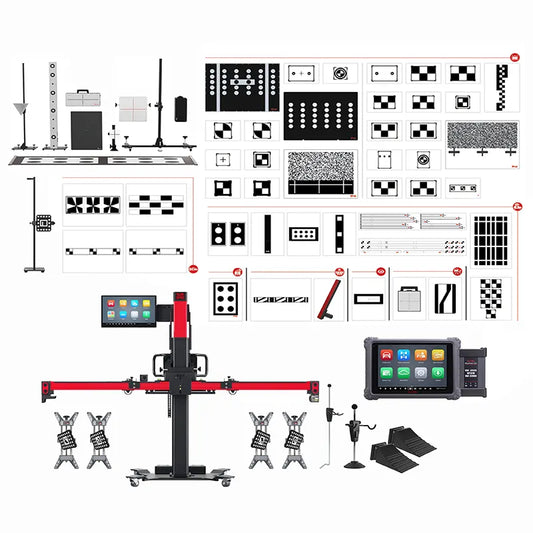
At Autel Diagnostic Tools, we are an experienced Autel reseller and have been since 2016. We carry the full range of Autel ADAS calibration systems, and two products stand out as the best options for shops entering this market or upgrading their current setup.
Autel MA600 — Best-Selling Mobile ADAS Calibration System
Price range: $5,000 - $8,000
The MA600 is Autel's best-selling mobile ADAS calibration frame, and for good reason. It is designed for shops that need a capable, portable system without the footprint or cost of a full alignment-integrated solution.
Key features of the MA600:
- Portable and collapsible — The aluminum frame breaks down for storage and transport, making it ideal for shops with limited floor space or mobile calibration operations.
- 2-line and 5-line centering lasers — Ensures precise alignment of the calibration frame to the vehicle's centerline, which is the foundation of an accurate calibration.
- LDW (lane departure warning) targets included — Comes equipped with the target patterns needed for the most common forward camera calibrations.
- Covers 95% of ADAS-equipped vehicles — Autel's calibration software and target library supports the vast majority of makes and models on the road today.
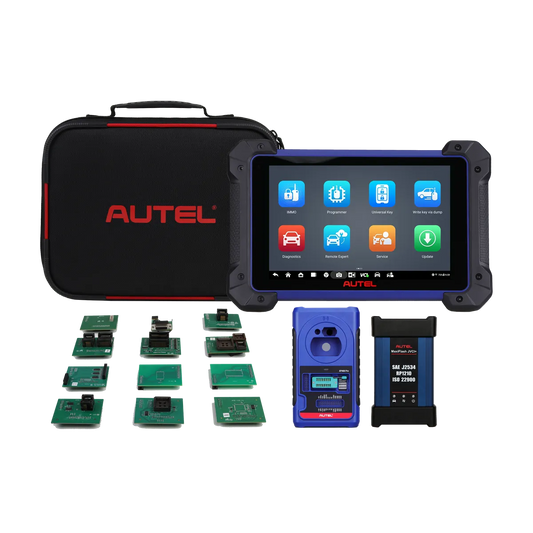
The MA600 is the right choice for shops that want to start performing ADAS calibrations immediately with a manageable investment. It pairs with Autel's MaxiSYS diagnostic tablets, which guide technicians step-by-step through each calibration procedure.
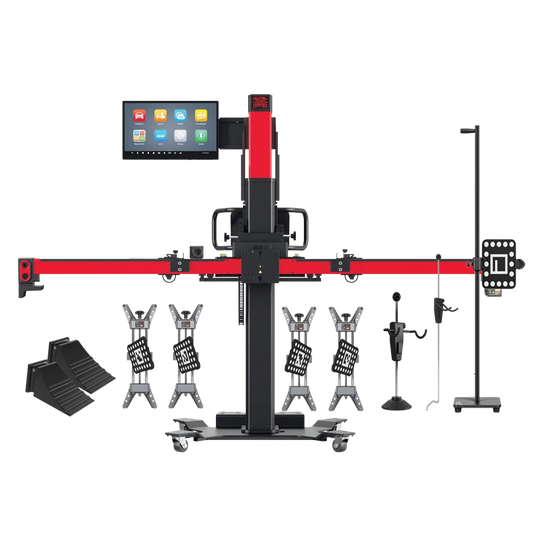
Autel IA900 — Alignment-Integrated ADAS Calibration
Price range: $15,000 - $20,000
The IA900 is Autel's premium solution for shops that want to combine four-wheel alignment with ADAS calibration in a single, streamlined workflow. This is particularly significant because wheel alignment is itself an ADAS calibration trigger — having both capabilities in one system means you catch every calibration need at the point of service.
Key features of the IA900:
- Six-camera alignment system — Provides full four-wheel alignment measurements with best-in-class accuracy.
- Automatic height monitoring — Continuously tracks vehicle ride height during the alignment and calibration process, ensuring sensor aim accounts for the vehicle's actual stance.
- 0.02-degree precision — Meets or exceeds the alignment accuracy required by every OEM for ADAS calibration.
- Integrated workflow — Perform the alignment and the calibration on the same equipment, in the same bay, without moving the vehicle. This is a major time saver and a significant reduction in cycle time.
For shops that already perform a high volume of alignments, the IA900 transforms that existing workflow into a calibration revenue generator.
Complete ADAS Packages
Autel also offers complete packages that bundle the calibration frame, a MaxiSYS diagnostic tablet, and the full target set for $18,000 to $30,000. These packages are designed so a shop can go from zero ADAS capability to performing calibrations on day one.
Not sure which system is the right fit for your shop? Call us at 866-217-0063. As an experienced Autel reseller since 2016, we can help you evaluate your current workflow and recommend the right package. Every purchase includes free shipping, free phone tech support, and a full manufacturer warranty.
ROI Breakdown: Real Numbers for Real Shops
ADAS calibration equipment pays for itself faster than almost any other capital investment a shop can make. Here is a straightforward breakdown.
Revenue Per Calibration
- Forward camera calibration: $250 - $500 per vehicle
- Radar or lidar calibration: $150 - $350 per vehicle
Most vehicles that require calibration need at least one forward camera calibration. Many need multiple calibrations — forward camera plus one or more radar modules — which means a single vehicle can generate $400 to $850 or more in calibration revenue.
Payback Period
Based on real-world service volumes, shops that invest in Autel ADAS calibration equipment typically achieve full ROI within 4 to 6 weeks of beginning calibration services.
Here is what the math looks like at scale:
- 10 calibrations per week — At an average of $350 per calibration, that is $3,500 per week, or roughly $182,000 per year. Against an equipment investment of $18,000 to $30,000, that represents a 6x return on total equipment investment in Year 1.
- 20 calibrations per week — At the same average, that is $7,000 per week, or roughly $364,000 per year. That is a 12x return on investment in Year 1.
Even conservative assumptions — 5 calibrations per week at $300 each — produce $78,000 in annual revenue against a maximum equipment cost of $30,000. The math works at virtually any volume.
The Hidden ROI: Revenue You Stop Losing
Remember, if you are currently subletting calibrations, you are already spending $250 to $500 per vehicle to have someone else do the work. An in-house system does not just add revenue — it also eliminates a recurring expense. The true ROI includes both the new revenue generated and the sublet costs eliminated.
Getting Started: What You Need
Adding ADAS calibration capability to your shop is more straightforward than many owners expect. Here is what the process looks like:
1. Evaluate your current volume. How many calibration-triggering repairs does your shop perform each month? Count windshield replacements, front-end collision repairs, alignments, suspension jobs, and bumper work. If the total is more than 10 per month, the investment case is strong.
2. Choose the right equipment. For most shops entering the ADAS calibration market, the Autel MA600 is the ideal starting point. It is affordable, portable, and covers 95% of ADAS-equipped vehicles. Shops with high alignment volume or a desire for an all-in-one solution should look at the Autel IA900. Talk to our team at 866-217-0063 — we will walk you through the options based on your specific situation.
3. Prepare your space. Static ADAS calibration requires a flat, level surface and adequate distance between the calibration frame and the vehicle (typically 10 to 20 feet, depending on the make and model). Many shops dedicate a single bay to calibration work. The MA600's collapsible design also allows you to set up and break down as needed if a dedicated bay is not available.
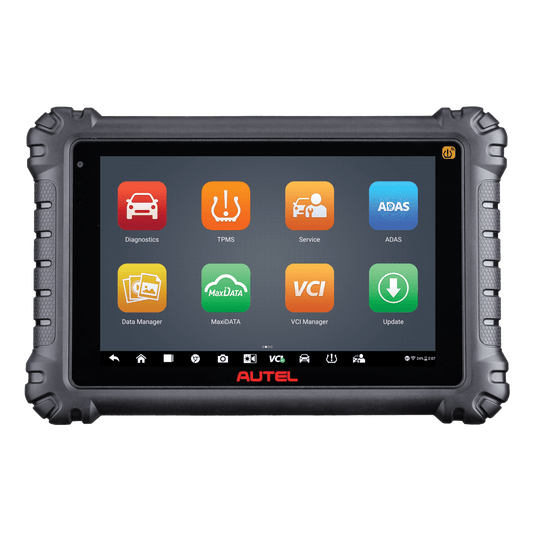
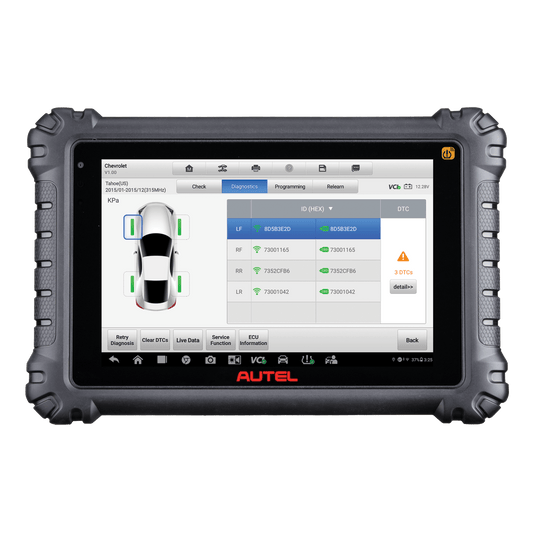
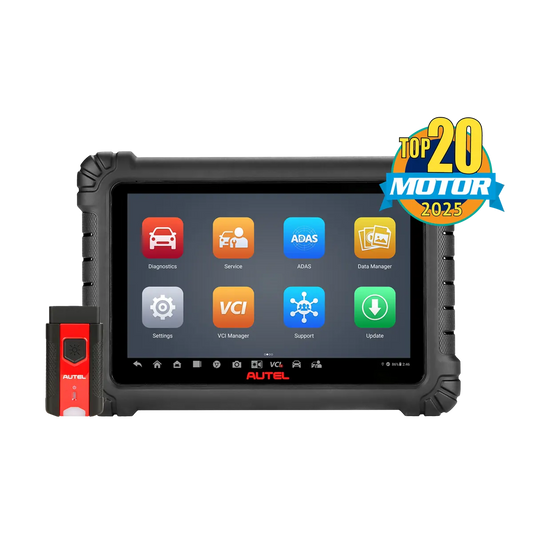
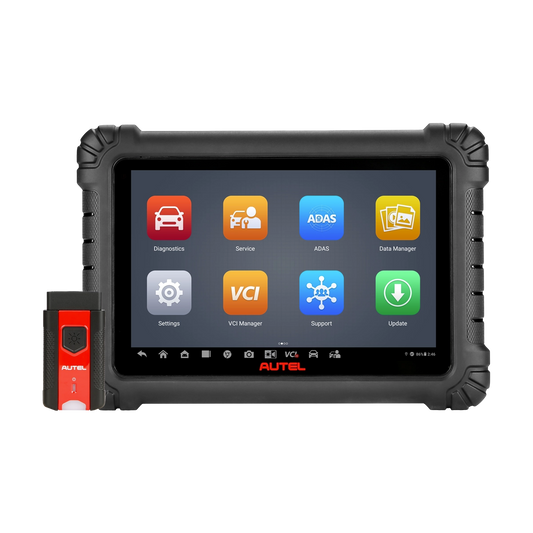
4. Train your technicians. Autel's MaxiSYS tablets provide step-by-step on-screen guidance for every calibration procedure. The learning curve is manageable — most technicians are performing calibrations confidently within their first week. Autel Diagnostic Tools also provides free phone tech support for every system we sell. If your technician has a question at 2:00 PM on a Tuesday with a car on the rack, they can call and get help immediately.
5. Market the service. Let your existing customers, insurance partners, and local glass shops know that you now offer in-house ADAS calibration. Glass companies in particular are a strong referral source, since every windshield replacement on a camera-equipped vehicle needs calibration.
The Window Is Open — But It Will Not Stay Open Forever
The shops investing in ADAS calibration now are establishing themselves as the go-to providers in their markets. They are building the expertise, the reputation, and the referral relationships that will compound over time. As ADAS penetration continues to climb — 50% of registered vehicles will have 8 or more systems by 2029 — the demand for calibration services will only grow.
The question is not whether your shop will need ADAS calibration capability. The question is whether you will have it in place before your competitors do.
Autel Diagnostic Tools has been an experienced Autel reseller since 2016. We offer free shipping on every order, free phone tech support for every product we sell, and a full manufacturer warranty. Our team knows this equipment inside and out, and we are here to help you make the right decision for your shop.
Ready to add ADAS calibration to your shop? Call us today at 866-217-0063 or browse our full selection of ADAS calibration systems online.
Recommended ADAS Calibration Equipment
- Autel IA900WA MaxiSYS ADAS Alignment and Calibration System — Our most popular ADAS frame with alignment capability
- Autel IA900LDWT ADAS System with LDW Targets and MS Ultra Tablet — Complete package with Lane Departure Warning targets and diagnostic tablet
- Autel IA700 All-Systems ADAS Calibration System — Budget-friendly entry into ADAS calibration
- Autel IA1000 Automated Alignment and ADAS System — Top-tier automated calibration for high-volume shops
- Autel MA600 CV ADAS Add-On Frame — Expand into commercial vehicle ADAS calibration