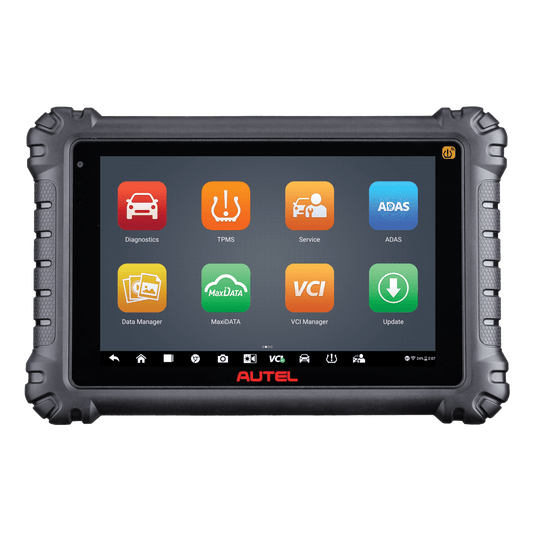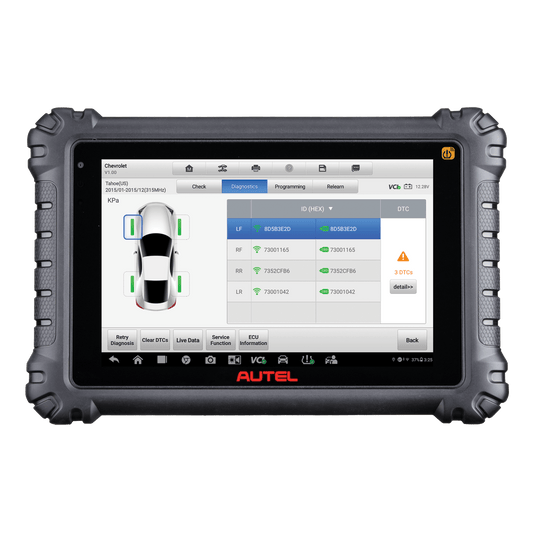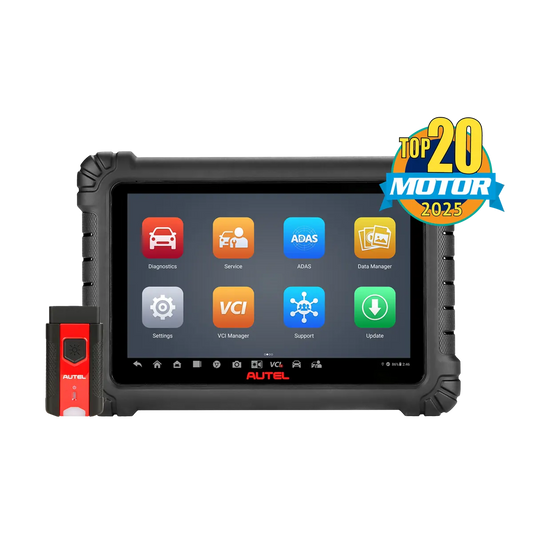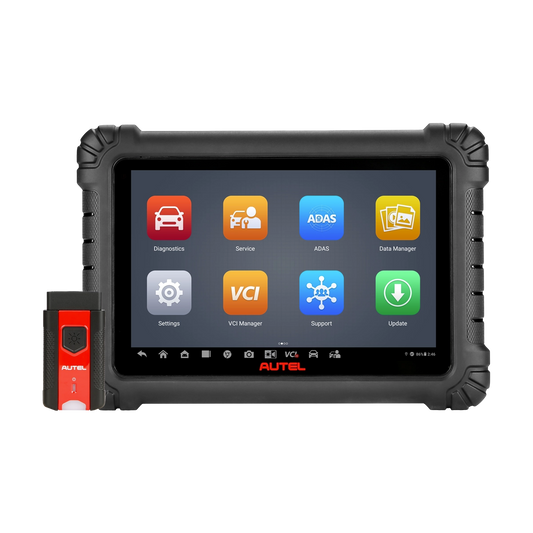
Choosing the right automotive scan tool is one of the most important equipment decisions a technician or shop owner will make. The right tool pays for itself many times over through faster diagnoses, expanded service capabilities, and fewer comebacks. The wrong tool wastes money, wastes time, and limits what your shop can do.
With dozens of scan tools on the market at price points ranging from under $100 to over $5,000, the selection process can feel overwhelming. This guide breaks down what to look for, what the different tiers of scan tools offer, and how to match a tool to your specific needs.
Understanding Scan Tool Tiers
Not all scan tools are created equal. The market breaks down into several distinct tiers, each designed for a different user and use case.
Code Readers — The Entry Point
Code readers are the most basic diagnostic tools. They connect to a vehicle's OBD2 port and can read and clear diagnostic trouble codes (DTCs) from the engine control module. Some also display basic live data like RPM, coolant temperature, and fuel trim values.
Best for: DIY car owners, hobbyists, and shops that need a quick code-check tool alongside their primary scanner.
Limitations: Code readers typically only access the engine and transmission modules. They cannot reach ABS, airbag, TPMS, or other advanced vehicle systems. They also lack bi-directional control, service functions, and advanced diagnostics.
Autel options: The AutoLink AL319 and AL519 series offer reliable, affordable code reading with better-than-average feature sets for their price range.
Mid-Range Scan Tools — The Professional Sweet Spot
Mid-range professional scan tools represent a major step up from code readers. These tools provide full-system access — meaning they can communicate with every electronic module in the vehicle, not just the engine. They also offer bi-directional control (the ability to command components to actuate for testing), service functions (oil reset, brake bleed, battery registration, etc.), and broader vehicle coverage.
Best for: Independent repair shops, mobile technicians, and any professional who needs to diagnose more than just engine codes.
Key features to look for:
- Full-system diagnostics (all modules, not just powertrain)
- Bi-directional control / active tests
- Common service functions (oil reset, EPB, SAS, DPF, BMS, injector coding)
- Broad vehicle coverage (domestic, Asian, European)
- Regular software updates
Autel options: The MaxiCOM MK808 series and MaxiSys MS906 Pro deliver exceptional value in this tier, offering features that rival tools costing significantly more.
Advanced Professional Scanners — Maximum Capability
The top tier of scan tools is built for shops that demand the deepest diagnostic capabilities available. These tools offer everything the mid-range tier does, plus advanced features like ECU coding and programming, J2534 pass-through reprogramming, topology mapping, oscilloscope integration, and the deepest level of OE-equivalent system access.
Best for: High-volume shops, dealership service departments, fleet operations, and any shop working on complex driveability and electrical issues.
Key features:
- Everything in the mid-range tier, plus:
- ECU coding and online programming (J2534)
- Network topology mapping
- Intelligent Diagnostics (AI-assisted code analysis)
- Advanced graphing and data logging
- Multi-protocol vehicle communication
- Optional ADAS calibration integration
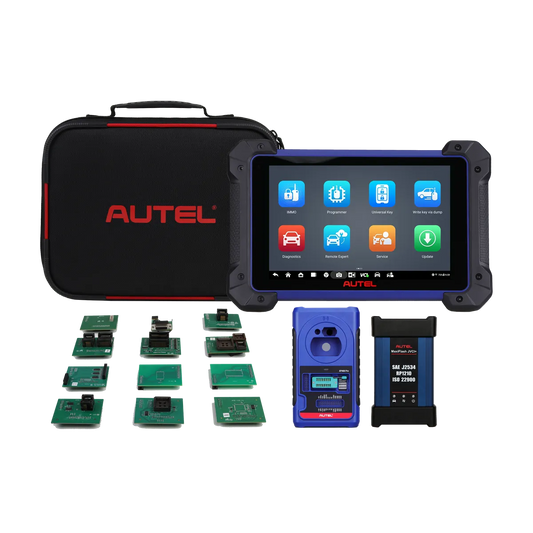
Autel options: The MaxiSys Ultra, MS919, and MS909 represent the pinnacle of aftermarket diagnostic capability. The Ultra, in particular, features a dual-screen design, 5-in-1 VCMI communication interface, and the broadest coverage depth in Autel's lineup.
Seven Factors to Consider When Choosing
1. Vehicle Coverage
This is the single most important factor. A scan tool is only useful if it supports the vehicles you work on. Consider the mix of makes and models that come through your shop. If you work on European vehicles, make sure the tool offers deep coverage for BMW, Mercedes, Audi, and VW — not just basic code reading. Autel's professional tools are known for particularly strong coverage across all regions.
2. Diagnostic Depth
There is a difference between reading codes and truly diagnosing a vehicle. Look for tools that offer live data graphing, freeze frame analysis, bi-directional control, and active testing. These capabilities let you verify component operation rather than guessing based on a code alone.
3. Software Updates
Vehicles change every year, and your scan tool needs to keep up. Prioritize tools that receive regular software updates with new vehicle coverage and features. Autel releases updates frequently, and most professional tools include one year of updates at no additional cost.
4. Service Functions
Modern vehicles require electronic procedures for routine maintenance tasks. Oil service resets, electronic parking brake service, steering angle calibration, battery registration, DPF regeneration, and injector coding are all common needs. Make sure your tool supports the service functions your shop performs regularly.
5. Ease of Use
A powerful tool is worthless if your technicians cannot navigate it efficiently. Look for intuitive interfaces, fast boot times, responsive touchscreens, and logical menu structures. Autel's Android-based tablets are widely praised for their user-friendly interface — technicians can get productive quickly without extensive training.
6. Build Quality and Durability
Shop environments are harsh. Your scan tool needs to survive drops, fluid exposure, and daily wear. Consider the build quality of the tablet, the ruggedness of the VCI (Vehicle Communication Interface), and the quality of the OBD2 cable. Professional-grade tools are built for the shop floor, not the living room.
7. Total Cost of Ownership
The purchase price is just the beginning. Factor in annual software update costs, the price of replacement cables and adapters, and the value of technical support. A $2,000 tool with $600/year updates and good support may be a better long-term investment than a $1,500 tool with $800/year updates and no phone support.
Beginner vs. Professional: A Quick Comparison
If you are just starting out or run a low-volume shop, a mid-range tool like the Autel MaxiCOM MK808 gives you professional-level capability without the premium price tag. It covers the vast majority of diagnostic scenarios you will encounter and grows with your skills.
If you are running a busy multi-bay shop, working on high-end European vehicles, or need programming capability, invest in a MaxiSys MS909 or Ultra. The time saved on complex diagnostics and the ability to handle jobs you would otherwise turn away will justify the investment quickly.
The Bottom Line
The right scan tool is the one that matches your shop's vehicle mix, your diagnostic needs, and your budget — while leaving room to grow. Do not buy the cheapest option and hope for the best. Do not buy the most expensive option if you will never use half its features. Buy the tool that fits your work today and can handle where your shop is headed tomorrow.
Need help deciding? Our team has helped thousands of technicians and shop owners find the right Autel tool for their operation. Call us at 866-217-0063 for a personalized recommendation based on your specific needs, or browse our full catalog of Autel scan tools.