If you run a body shop in 2026 and you are not performing ADAS calibrations, you are leaving substantial revenue on the table and sending your customers elsewhere for a critical part of the repair process. Approximately 65 percent of collision repairs now require at least one ADAS calibration, and that number climbs with every new model year. This guide covers everything body shop owners need to know about adding ADAS calibration services: the equipment, the investment, the return, and the practical considerations that determine success or failure.
Why Body Shops Cannot Ignore ADAS Any Longer
The 65 Percent Reality
Advanced Driver Assistance Systems are no longer luxury features found only on high-end vehicles. Automatic emergency braking, lane departure warning, blind spot monitoring, adaptive cruise control, and rear cross-traffic alert are now standard equipment on mainstream vehicles from Toyota, Honda, Hyundai, Ford, and virtually every other manufacturer. The Insurance Institute for Highway Safety reports that a majority of new vehicles sold in the US now include multiple ADAS features as standard equipment.
For body shops, this means that the majority of vehicles coming in for collision repair will have at least one ADAS system that needs calibration after structural repair, windshield replacement, wheel alignment changes, or sensor-area bodywork.
The Revenue Opportunity
ADAS calibrations typically bill between $300 and $800 per procedure, depending on the vehicle make, the systems involved, and your market. Many collision repairs require multiple calibrations, meaning a single vehicle can generate $500 to $1,500 in additional revenue. For a shop performing 3 to 5 calibrations per day, that represents $900 to $4,000 in daily incremental revenue.
The Liability Factor
Returning a vehicle to a customer without performing required ADAS calibrations after a collision repair is a liability issue. If a forward collision warning system fails to function because a camera was not recalibrated after a windshield replacement, and that failure contributes to an accident, the repairing shop faces significant exposure. Insurance companies and OEMs are increasingly clear that post-repair ADAS calibration is not optional.
Understanding ADAS Systems by Type
Before investing in calibration equipment, you need to understand what you are calibrating. ADAS systems use four primary sensor types, each with different calibration requirements.
Camera-Based Systems
- Forward-facing camera (windshield-mounted): Responsible for lane departure warning, lane keep assist, automatic emergency braking, traffic sign recognition, and adaptive cruise control. This is the most commonly calibrated system because windshield replacement is one of the most frequent repair triggers.
- 360-degree surround view cameras: Four cameras (front, rear, left, right) that create a bird's-eye view. Each camera must be independently calibrated.
- Rear camera: Used for parking assistance and rear cross-traffic detection.
Radar-Based Systems
- Front long-range radar: Adaptive cruise control, forward collision warning. Usually mounted behind the front bumper or grille.
- Corner radar sensors: Blind spot monitoring, rear cross-traffic alert, lane change assist. Mounted in the rear bumper area.
- Short-range radar: Parking sensors, close-range collision avoidance.
Lidar Systems
- Currently limited to select premium vehicles (some Audi, BMW, Mercedes models) but expanding rapidly.
- Calibration typically requires manufacturer-specific procedures and is less common in body shop environments today.
Ultrasonic Sensors
- Parking sensors, close-range obstacle detection.
- Usually do not require formal calibration after replacement, but may need coding to the vehicle's ECU.
Static vs. Dynamic Calibration
ADAS calibration falls into two categories, and most shops will need to perform both.
Static Calibration
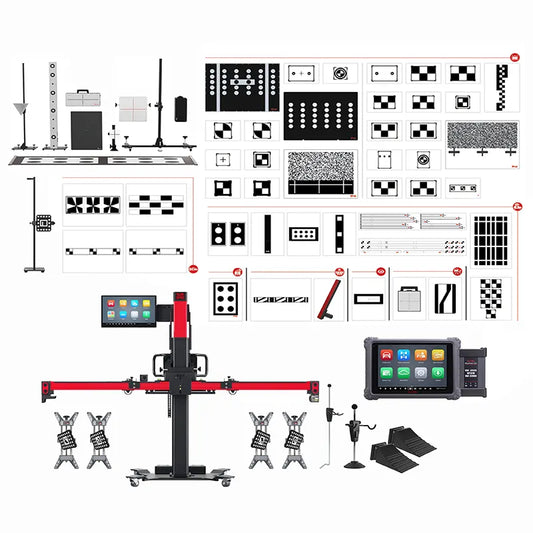
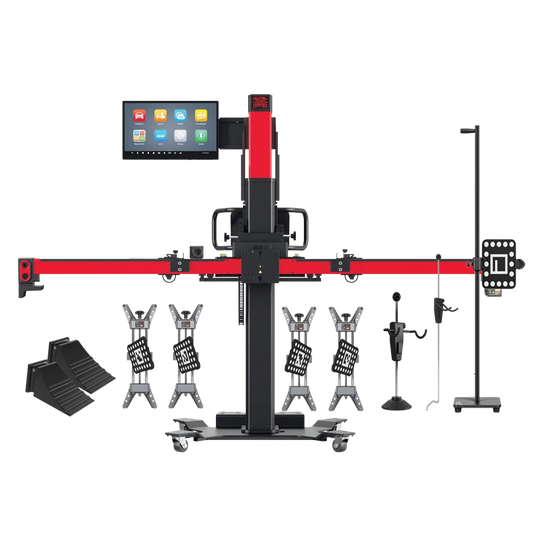
Performed in the shop using a calibration frame with manufacturer-specific targets. The vehicle is positioned at a precise distance from the frame, targets are set to exact heights and positions, and the scan tool initiates the calibration procedure. The camera or radar sensor adjusts to the known target positions.
Static calibration requires:
- A calibration frame with appropriate target boards
- A level floor surface
- Adequate space (typically 25 to 35 feet in front of the vehicle, depending on manufacturer requirements)
- Controlled lighting (no direct sunlight on targets)
- A compatible diagnostic scan tool to initiate and verify the calibration
Dynamic Calibration
Performed by driving the vehicle at specific speeds on specific road types (usually a well-marked highway) while the scan tool monitors the calibration process. Some manufacturers accept dynamic calibration as a standalone procedure; others require static calibration first, followed by a dynamic drive to verify.
Dynamic calibration requires:
- A compatible scan tool
- Access to appropriate roads (lane markings, clear conditions)
- Specific speed ranges maintained for defined distances
- Moderate weather conditions
Most body shops focus on static calibration because it can be performed on-site, is more repeatable, and does not depend on weather or road conditions.
Autel ADAS Calibration Equipment Options
Autel offers three primary ADAS calibration frame systems, each targeting different shop sizes, budgets, and volume expectations.
Autel IA700: Entry-Level Frame
The IA700 is Autel's most affordable calibration package, designed for shops entering the ADAS market. It includes a calibration frame with a core set of targets covering the most common forward camera and radar calibration procedures.
- Approximate price: $3,000 - $3,500 (frame and targets)
- Coverage: Forward-facing camera calibration for major domestic, Asian, and European makes. Front radar calibration for select vehicles.
- Space required: Approximately 25 feet of clear space in front of the vehicle
- Best for: Shops performing 1 to 3 calibrations per day, shops testing the ADAS market before larger investment
- Limitations: Does not include all target boards for full multi-system calibration. Corner radar and 360-camera calibration require additional targets sold separately.
Autel IA900: Mid-Range Professional Frame
The IA900 is the most popular choice for production body shops. It includes a comprehensive target set covering forward cameras, front radar, corner radar, and most surround-view camera calibrations.
- Approximate price: $4,500 - $7,500 (depending on target package)
- Coverage: Forward camera, front long-range radar, corner/blind spot radar, 360-degree surround view cameras across most major manufacturers
- Space required: Approximately 30 feet of clear space
- Best for: Body shops performing 3 to 5 calibrations per day, shops committed to offering comprehensive ADAS services
- Advantages: Motorized crossbar height adjustment, laser alignment system for precise frame positioning, wider vehicle coverage
Autel IA1000: Full-Scale Production Frame
The IA1000 is Autel's top-tier calibration system, designed for high-volume collision centers and multi-store operations.
- Approximate price: $10,000 - $14,000 (full target package)
- Coverage: Comprehensive multi-system calibration including night vision, head-up display, and emerging ADAS technologies
- Space required: Approximately 35 feet of clear space
- Best for: High-volume collision centers performing 5+ calibrations per day, shops wanting maximum future-proof coverage
- Advantages: Fastest setup time, most complete target library, designed for production-line efficiency
Important Note: Scan Tool Required
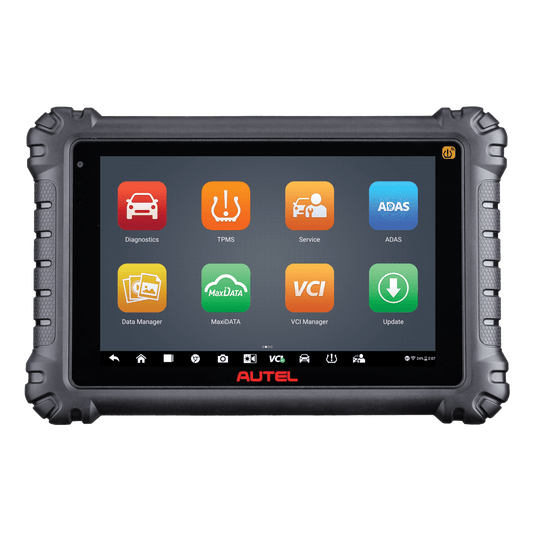
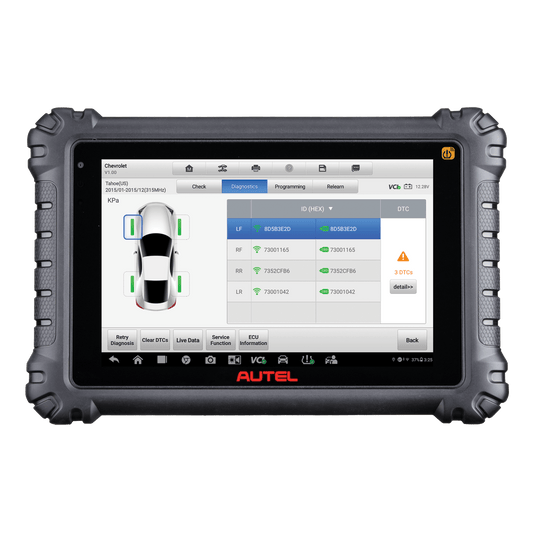
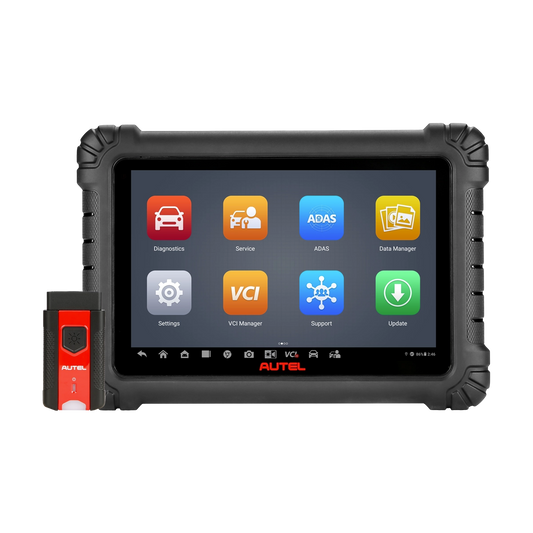
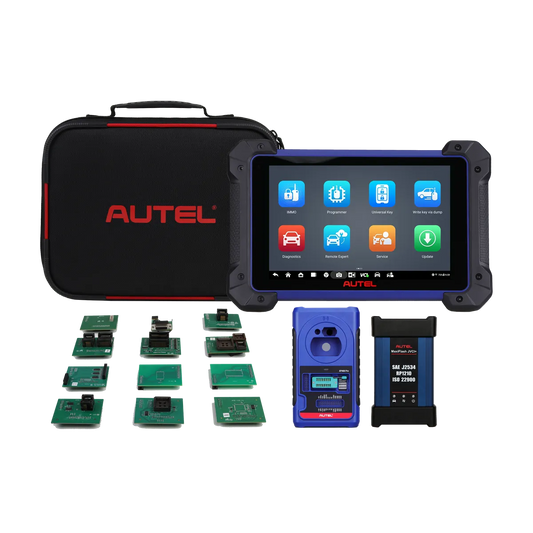
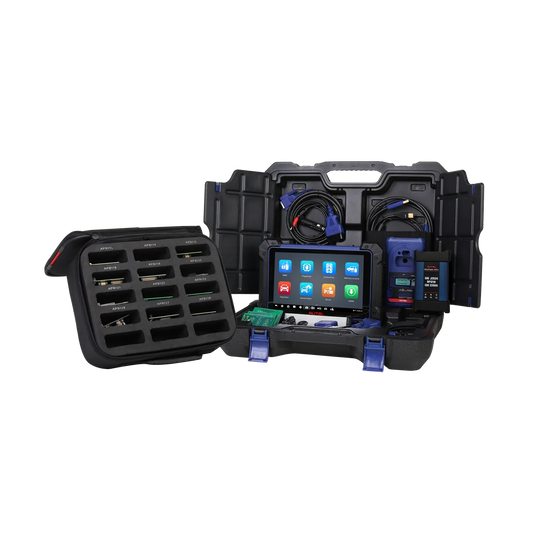
All Autel ADAS calibration frames require a compatible Autel diagnostic tablet to initiate and control the calibration procedure. The MaxiSYS Ultra S2, MS919, MS909, or MS906 Pro all support ADAS calibration with the IA frame systems. The scan tool is what communicates with the vehicle, initiates the calibration mode, and verifies completion. Budget for the scan tool if you do not already own one.
Equipment Comparison Table
| Feature | Autel IA700 | Autel IA900 | Autel IA1000 |
|---|---|---|---|
| Price Range | $3,000 - $3,500 | $4,500 - $7,500 | $10,000 - $14,000 |
| Forward Camera | Yes | Yes | Yes |
| Front Radar | Select vehicles | Yes | Yes |
| Corner/BSM Radar | Add-on targets | Yes | Yes |
| 360 Surround View | No | Yes | Yes |
| Night Vision | No | No | Yes |
| Laser Alignment | Basic | Yes | Advanced |
| Motorized Adjust | No | Yes | Yes |
| Setup Time | 15-20 min | 10-15 min | 8-12 min |
| Space Needed | ~25 ft | ~30 ft | ~35 ft |
| Best For | Entry-level shops | Production body shops | High-volume centers |
Autel MA600: Portable ADAS Solution
For mobile calibration services or shops with limited space, the Autel MA600 offers a compact, portable alternative. It uses a simplified frame design with a smaller footprint while still covering the most common forward camera calibrations. The MA600 is ideal as a secondary unit or for mobile technicians who need to perform calibrations at dealerships, body shops, or glass companies.
Setup Requirements: Getting Your Space Ready
Floor Requirements
- The calibration area must have a level floor. A slope of more than 1 degree can cause calibration errors.
- Painted or sealed concrete is ideal. Uneven or cracked surfaces should be repaired.
- Some shops invest in a self-leveling floor coating in their calibration bay for consistency.
Space Requirements
- Minimum 25 to 35 feet of clear space in front of the vehicle, depending on manufacturer requirements and your frame system.
- The area should be wide enough to position the frame at the vehicle's center axis (typically 15 feet wide).
- No obstructions (pillars, equipment, other vehicles) between the vehicle and the calibration frame.
Lighting Requirements
- Consistent, diffused overhead lighting. Direct sunlight on the calibration targets causes false readings and failed calibrations.
- Avoid fluorescent lights that create visible flicker (LED panels are preferred).
- No reflective surfaces (chrome, glass, mirrors) in the camera's field of view during calibration.
- Many shops install blackout curtains or position the calibration bay away from windows and bay doors.
Climate Control
- Extreme cold can affect sensor behavior and camera clarity. A heated calibration bay is important in northern climates.
- Humidity should be moderate to prevent condensation on camera lenses.
ROI Calculation: How Fast Will You Pay It Back?
Let us run the numbers for a typical body shop adding ADAS calibration with an Autel IA900 system.
Investment
| Item | Cost |
|---|---|
| Autel IA900 frame + targets | $6,500 |
| Autel MaxiSYS MS909 or Ultra S2 (if not owned) | $4,295 - $5,995 |
| Floor preparation / bay setup | $500 - $2,000 |
| Lighting improvements | $300 - $1,000 |
| Training (2-3 day Autel course) | $500 - $1,500 |
| Total Investment (with new scan tool) | $12,095 - $17,000 |
| Total Investment (existing scan tool) | $7,800 - $11,000 |
Revenue (Conservative Estimate)
| Metric | Conservative | Moderate | Aggressive |
|---|---|---|---|
| Calibrations per day | 2 | 4 | 6 |
| Average revenue per calibration | $400 | $450 | $500 |
| Working days per month | 22 | 22 | 22 |
| Monthly gross revenue | $17,600 | $39,600 | $66,000 |
| Monthly labor cost (tech time) | $3,200 | $6,400 | $9,600 |
| Monthly net revenue | $14,400 | $33,200 | $56,400 |
| Payback period (with scan tool) | 5-6 weeks | 2-3 weeks | 1-2 weeks |
Even at the conservative estimate of 2 calibrations per day, the equipment pays for itself in approximately 4 to 6 weeks. At moderate volume, you are looking at a 2 to 3 week payback. Few shop investments offer this kind of return.
ADAS Systems by Major Vehicle Brand
Understanding which brands have which systems helps you anticipate calibration demand:
| Brand | ADAS Suite Name | Common Calibration Triggers |
|---|---|---|
| Toyota/Lexus | Toyota Safety Sense | Windshield, front bumper, wheel alignment |
| Honda/Acura | Honda Sensing | Windshield, front bumper, radar unit R&R |
| Hyundai/Kia/Genesis | SmartSense / Highway Driving Assist | Windshield, bumper, structural repair |
| Ford/Lincoln | Ford Co-Pilot360 | Windshield, bumper, mirror housing |
| GM (Chevy/GMC/Cadillac) | Super Cruise / Safety Alert Seat | Windshield, front-end structural, radar R&R |
| Stellantis | Various by brand | Windshield, bumper, mirror, quarter panel |
| Subaru | EyeSight | Windshield (always), wheel alignment |
| BMW | Driving Assistant Professional | Windshield, bumper, radar, camera module |
| Mercedes-Benz | Active Safety Assist | Windshield, bumper, structural repair |
| Tesla | Autopilot / Full Self-Driving | Camera replacement, windshield, structural |
Training Requirements
ADAS calibration is not plug-and-play. Technicians need proper training to perform calibrations correctly and efficiently.
Recommended Training Path
- Autel ADAS Training Course (2-3 days): Autel offers hands-on training at regional locations covering frame setup, target selection, calibration procedures, and troubleshooting. This should be your starting point.
- I-CAR ADAS Courses: I-CAR offers several ADAS-related courses that provide broader understanding of how these systems work, why calibration matters, and how to integrate calibration into your repair workflow.
- OEM-Specific Training: For shops specializing in certain brands, OEM technical training provides the deepest understanding of that manufacturer's specific requirements.
- Ongoing Education: ADAS technology changes rapidly. Budget for continuing education, and expect to send technicians for refresher training annually.
Technician Skill Requirements
- Strong diagnostic scan tool proficiency
- Understanding of wheel alignment and vehicle geometry
- Attention to detail (target positioning accuracy matters)
- Ability to follow manufacturer-specific procedures precisely
- Basic understanding of sensor physics (how cameras and radar work)
Insurance and Liability Considerations
Insurance Requirements
Contact your shop's insurance provider before beginning ADAS calibrations. Most business liability policies need to be updated to cover calibration services. Some insurers require proof of training and equipment certification. The additional premium is typically modest compared to the revenue generated.
Documentation Is Critical
For every calibration, document:
- Vehicle identification (VIN, year, make, model, ADAS equipment)
- Pre-calibration scan results
- Calibration procedure performed (static, dynamic, or both)
- Post-calibration verification results
- Technician name and certification
- Equipment used (including serial numbers and last calibration date)
This documentation protects you legally and satisfies insurance company requirements. Most Autel scan tools generate calibration reports automatically that can be saved and printed.
Getting Started: Your ADAS Calibration Checklist
Ready to add ADAS calibration to your body shop? Follow this step-by-step checklist:
- Assess your volume: Review your last 6 months of repair orders. Count how many vehicles had ADAS-equipped systems. This tells you your potential calibration volume.
- Survey your space: Identify a bay or area that can provide 25 to 35 feet of clear space with controlled lighting. Measure floor levelness.
- Choose your equipment tier: Match the equipment investment to your expected volume. Start with the IA700 or IA900 based on your calibration mix and budget.
- Invest in a diagnostic scan tool: If you do not already own an Autel MaxiSYS platform, budget for one. The scan tool is as essential as the calibration frame.
- Prepare the space: Level the floor, install appropriate lighting, add blackout curtains if needed, and mark floor positions for consistent frame placement.
- Train your technicians: Send at least two technicians through Autel's ADAS training program. Having backup coverage prevents scheduling bottlenecks.
- Update your insurance: Notify your insurer and update your coverage to include ADAS calibration services.
- Market the service: Inform your insurance company partners, dealership referral sources, and glass companies that you now offer in-house ADAS calibration.
- Establish procedures: Create standardized workflows for calibration intake, execution, verification, and documentation.
- Track and optimize: Monitor your calibration volume, revenue, turnaround time, and success rate. Adjust pricing and marketing as needed.
Common Mistakes to Avoid
- Skipping floor leveling: A 1-degree floor slope can cause a forward camera to be calibrated off-center, creating a safety issue. Invest in floor preparation.
- Ignoring lighting: Sunlight and reflections cause the majority of failed calibration attempts. Control your environment.
- Insufficient space: Do not try to squeeze a calibration setup into a bay that is too short. Manufacturer distance requirements exist for a reason.
- Skipping pre-calibration scans: Always scan the vehicle before calibration to identify existing DTCs that could affect the procedure.
- Not verifying wheel alignment: Camera calibration accuracy depends on the vehicle being properly aligned. Verify alignment before calibrating.
- Underpricing: ADAS calibration is a specialized, skilled service. Price it accordingly. Research your market and charge what the service is worth.
The Bottom Line
ADAS calibration is not a trend. It is a permanent shift in the automotive repair industry. Body shops that invest in calibration equipment today position themselves for sustained revenue growth, improved customer retention, and compliance with evolving repair standards. The ROI is compelling, the equipment is proven, and the demand is only going to increase.
As an independent Autel reseller since 2016, we can help you choose the right equipment package for your shop's volume, space, and budget. Contact us for a consultation and competitive pricing on Autel ADAS calibration systems.